Leads, harnesses & walk sets
The parts of the kit that take the strain. Rope leads spliced by hand rather than stitched, harnesses padded where the straps cross, and sets matched to the collars on the neckwear page.
Leads
Three lengths. The splice is tucked four times and whipped with waxed thread — it is the strongest part of the lead, not the weakest.
Town Lead, 1.2 m
10 mm rope · brass trigger
£34.00
Field Lead, 1.8 m
10 mm rope · sliding handle
£38.00
Two-Dog Coupler
40 cm · swivels at both ends
£24.00
Short Traffic Lead
60 cm · for close work
£28.00
Long Line, 5 m
Recall training · floats
£42.00
Harnesses
Y-front, so nothing crosses the shoulder joint. Four adjustment points, padded at the sternum, with a ring front and back.
Harbour Harness
Chest 34–92 cm · four sizes
£54.00
Long-Back Harness
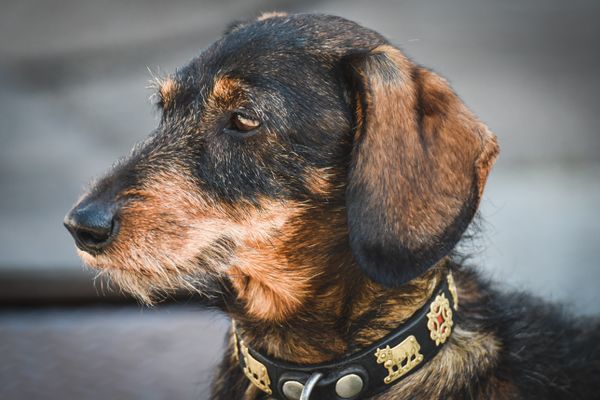
Cut for dachshund proportions
£58.00
Deep-Chest Harness
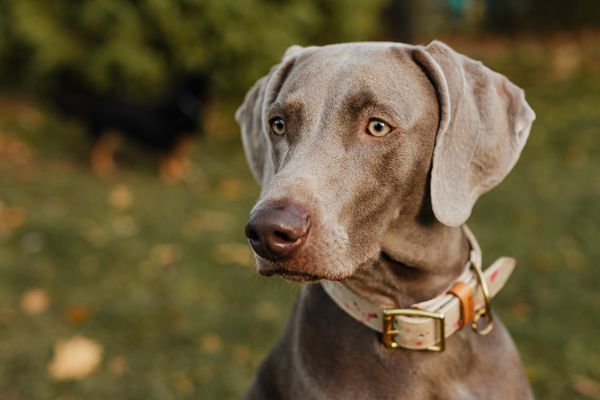
Sighthound cut · chest 60–92 cm
£58.00
Puppy Harness
Chest 28–44 cm · lightweight
£44.00
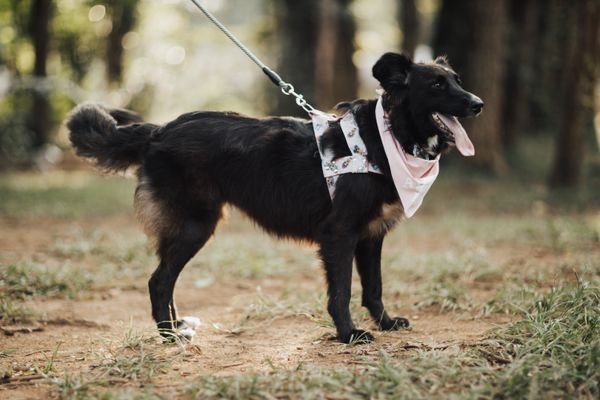
Walk Set
Collar, lead & bandana matched
£62.00
Fitting a Y-front harness
Start with every strap let out. Put the neck opening over the head, clip the belly strap, then tighten from the chest first and the girth second. The join at the sternum should sit on the breastbone, not up in the throat, and you should be able to slide a flat hand under the girth without forcing it.
If the front strap rides up when the dog pulls, the neck opening is too loose rather than too tight — a common misreading that leads people to buy a size down and end up with something that restricts the shoulder.
Which lead length
- 60 cm — pavements, vets, anywhere you need the dog beside you.
- 1.2 m — the standard town length; enough slack to sniff, not enough to wrap round a lamp post.
- 1.8 m — parks and towpaths, with a sliding handle so it shortens without a second clip.
- 5 m — recall practice in open ground only. It is a training tool, not a walking lead.
Rope, and why we splice it
The leads use a 10 mm three-strand cotton-core rope. A stitched loop relies on thread; a splice relies on the rope's own friction, which is why the load rating of a properly tucked splice is close to that of the unbroken rope. Each one is tucked four times, tapered, then whipped with waxed thread so it cannot creep.
Cotton rope goes soft with use and does not burn a palm the way some synthetics do. It will also hold mud, so it is worth putting through a 30° wash once a month.